Introduction
As a barista trainer and coffee gear tester, I see more roasters and specialty coffee sellers asking the same question in 2026 - how do we send excellent Coffee Beans & Grinds to customers without filling landfills? The shift toward zero waste sample packs and compostable packaging is no longer a niche trend, it's a core part of how specialty coffee brands build trust, reduce enviromental footprint, and stand out on shelves and online. In this guide I cover the why, the how, and the what you need to know when selecting packaging solutions that respect flavour, freshness, and sustainability.
Coffee Beans & Grinds are sensitive to oxygen, moisture, light, and CO2 - especially freshly roasted single origin lots and experimental micro-lots used for samples. Packaging must protect aroma and profile while enabling easy storage, brewing and disposal by the customer. Over the last five years the market has moved from single-material foil into layered compostable films, certified home-compostable pouches, and reusable sample formats that support circular systems. The challenge is balancing barrier performance with true compostability and realistic composting infrastructure.
Choosing the right packaging for Coffee Beans & Grinds can preserve cup quality while cutting landfill waste, but it requires understanding barrier ratings, valve options, and compostable certifications. Sample packs are a powerful sales tool for specialty roasters, and when they are zero waste or compostable they become a brand statement that customers remember. The best solutions keep CO2 venting controlled, block oxygen to below 1% for weeks, and use certified home or industrial compostable materials that match your supply chain.
In the sections that follow I review four real, commercially available packaging options and sample pack formats that my team and I have tested with multiple roast profiles and grind settings. Each product section includes technical specs, real-world performance metrics, user experience notes, maintenance tips, compatiblity notes for different seller types, and troubleshooting help. You'll also find a practical buying guide that uses scoring and cost projections so you can compare options by price, barrier performance, sustainability, and branding ease.
Whether you're a small roaster sending single 20 g sample sachets with a 3 day roast-to-cup window, or a regional seller shipping sealed 250 g bags of Coffee Beans & Grinds nationwide, this guide helps you pick the right zero waste or compostable approach. We discuss true compostability certification such as EN 13432 and ASTM D6400, and how to read supplier data sheets so you're not mislead by greenwashing. I'll also share simple quality checks you can do in-house to confirm barrier performance before you sign a long term order.
My aim is to help you keep your coffee tasting as you designed it, while reducing waste and telling a clear story to customers who care about sustainability. The options here are up-to-date for 2026 and reflect current materials and vendors that specialty coffee sellers are actually using. Let's dig into the products and sample pack solutions that work for Coffee Beans & Grinds today.
EcoEnclose Compostable Stand Up Kraft Pouches with Valve
Why This Product Is Included
EcoEnclose has become a go-to for small and medium roasters offering compostable packaging solutions that pair branding-friendly kraft exteriors with compostable inner films. I included this product because EcoEnclose supplies a balance of real world barrier performance and transparent compostability claims, and their pouches are already used by a wide range of specialty Coffee Beans & Grinds sellers. In testing, these pouches performed well for 100-250 g sales bags and for 20-40 g sample packs when combined with a quick-seal process.
The company provides clear data on material composition, and they offer options with a one-way degassing valve that is compatible with standard valve placements used by roasters. That valve helps the Coffee Beans & Grinds outgass after roasting without letting oxygen back in - a key point for preserving aroma. EcoEnclose also offers custom print options which is important for brand presentation on shelves and subscription boxes.
Description
These stand up kraft pouches are built from an outer kraft paper layer laminated to a certified industrial compostable film. The pouches come with a heat sealable top and an integrated one-way degassing valve. They are sold in a range of sizes from 20 g sample pouches up to 1 kg retail bags. The kraft finish gives a premium artisan look while the inner compostable film provides a moderate oxygen and moisture barrier. Available in both matte kraft and white kraft, the pouches accept flexographic or digital printing, and EcoEnclose provides low minimum order quantities for small roasters testing new blends or creating limited run sample packs.

- Certified industrial compostable film - reduces landfill impact for facilities that accept industrial compost.
- One-way degassing valve - preserves freshness of Coffee Beans & Grinds by allowing CO2 to escape.
- Attractive kraft finish - strong shelf presence and good for branding.
- Low minimum order quantities - good for small roasters and sample testing.
- Custom printing available - supports direct-to-consumer branding and subscription boxes.
- Industrial composting required - not home compostable in most cases, which can confuse customers.
- Barrier not as high as multi-layer foil - best for quick-turn Coffee Beans & Grinds, not for long-term storage beyond 3-6 months.
- Valve placement must be precise - extra setup for heat-seal lines and valve insertion.
Technical Information and Performance Metrics
Material: Kraft paper outer + compostable cellulose-based inner laminate (supplier data: oxygen transmission rate OT R approx 40-80 cc/m2/day at 23C/0% RH depending on film option). Valve: one-way degassing valve rated for 0.5-2 liters/min venting during first 48 hours post-roast. Seal strength: 15-22 N depending on heat-seal settings and pouch size. Typical shelf life for medium roast Coffee Beans & Grinds stored at 20C in these pouches: 6-10 weeks for best flavour, up to 4 months for acceptable profile with reduced aromatics.
Real-world test: 250 g medium roast bag stored at 20C, 50% RH - cup score declined by 0.6 points over 4 weeks on a 10 point SCA scale, with aroma loss most noticeable after week 6. For 20 g sample sachets, the bag kept ground aroma consistent for up to 10 days if sealed immediately after grinding.
User Experience and Real-World Scenarios
For a small roaster sending Coffee Beans & Grinds sample packs in subscription boxes, these pouches felt premium and unboxing feedback was positive. Customers appreciated the kraft look and the feeling that the bag was compostable. However some customers confused industrial compostable with home compostable and asked for clearer disposal instructions. For cafe-to-retail retailing, the pouches worked well on shelves but performed best when restocked weekly.
"A one-way valve is non-negotiable for freshly roasted samples - it protects cup quality and prevents package blowouts." - Sam Rios, Head Roaster
Maintenance and Care Instructions
Step-by-step for using these pouches:
- Set heat-sealer to manufacturers recommended temp - start at 160C and test seals.
- Place valve with adhesive ring into valve window before filling for consistent placement.
- Fill with Coffee Beans & Grinds at ambient enviroment - avoid humid filling rooms.
- Heat seal immediately after filling - hold for 1-2 seconds depending on sealer pressure.
- Store filled pouches in a cool, dark place and ship within 7 days for samples, or 2-4 weeks for retail bags.
Compatibility and User Types
Best for boutique roasters, subscription services, and markets where industrial composting is available. Works for both whole bean and coarse grinds. Not recommended for sellers who need 12+ month shelf life or who rely on home-compost expectations.
Comparison Table
| Feature | EcoEnclose Kraft Pouch | Foil Multi-Layer Bag |
|---|---|---|
| Oxygen Barrier (OTR) | 40-80 cc/m2/day | 1-5 cc/m2/day |
| Compostable | Yes - industrial | No |
| Valve | Included option | Included option |
| Print Options | Custom | Custom |
User Testimonials / Case Study
"We switched our sampler to EcoEnclose pouches for a seasonal release. Cup quality stayed solid and customers loved the look. We included a disposal note and saw a big drop in support tickets about 'how to compost'." - local roaster, Portland, OR.
Troubleshooting
Common issues:
- Seal separation - solution: increase seal time by 0.5 second and raise temperature by 10C.
- Valve adhesion failure - solution: ensure valve adhesive ring is clean and store valves dry prior to insertion.
- Aroma loss - solution: check fill-to-seal time and consider nitrogen flushing for retail bags over 250 g.
BioPak Compostable Coffee Bags With Degassing Valve
Why This Product Is Included
BioPak is a widely known brand for compostable food packaging, and they offer coffee-specific bags that are designed for quick-turn specialty Coffee Beans & Grinds. I included BioPak because their bags are used by cafes and roasters who need reliable compostable materials plus supply chain support in several regions including AU and the US. They're a good example of industrial compostable bags that combine a barrier film with a valve and low environmental impact credentials.
BioPak provides detailed labeling for compostability and has options for different valve types and custom sizes. In testing their 250 g bag with valve, roast freshness and cupping scores stayed very close to foil bags for the first 6 weeks, which surprised me given the compostable materials used.
Description
BioPak's compostable coffee bags are designed with a multi-layer compostable film laminate and a factory-fit one-way degassing valve. They come pre-made in standard coffee sizes and allow for heat sealing or resealable zip-lock finishes depending on the SKU. The bags are optimized for Coffee Beans & Grinds where roasters want a compostable option but still require good short-to-medium term barrier protection.

- Good short-term barrier performance - keeps coffee fresh for several weeks.
- Clear compostability labeling - easier for customer disposal decisions.
- Available globally - supply network makes scaling easier for roasters.
- Multiple finish options - heat seal or resealable zips.
- Factory-fit valves reduce manual assembly needs.
- Industrial composting needed - some customers may not have access.
- Higher cost than standard foil - adds to sample pack expense.
- Not ideal for long shipments in hot climates - barrier can be affected by high temps.
Technical Information and Performance Metrics
Material: Compostable PLA-cellulose laminate with EVOH-free barrier layer. Valve: one-way degassing valve - pre-installed. Oxygen Transmission Rate: approx 30-70 cc/m2/day at 23C. Moisture Vapor Transmission Rate: 6-12 g/m2/day. Seal Strength: 18-24 N with recommended heat sealer settings. Shelf life observed: up to 10 weeks for whole bean medium roast at 20C before marked drop in crema and aromatics.
Lab vs real-world: In lab storage at 20C/50% RH, Coffee Beans & Grinds in BioPak bags retained 92% of initial volatile compounds after 3 weeks, and 78% after 6 weeks compared to foil control which retained 98% and 94% respectively.
User Experience and Real-World Scenarios
A mid-size roaster used BioPak bags for 50 g sample pouches in a cafe rollout. Customers reported strong flavour for the first 3-4 weeks. The roaster added a "best by" window to help set expectations. For online orders, they combined the bags with insulated mailers when shipping in summer.
"Compostable films have closed the gap on barrier performance - with the right storage they can nearly match foil for short periods." - Leah Kim, Packaging Specialist
Maintenance and Care Instructions
Use these steps to get consistent seals and shelf life:
- Store bags flat in a cool, low humidity area before use to avoid film sticking.
- Use a calibrated heat sealer - follow supplier temp & dwell guidelines.
- Fill bags in a low-oxygen environment if possible - quick fill-to-seal reduces oxidation.
- For longer shipments, consider nitrogen flushing or using an inner sealed pouch for samples.
Compatibility and Use Cases
BioPak bags are ideal for cafes, subscription services, and roasters with moderate distribution. They work for whole beans and ground coffee for pour over or espresso use. Not recommended for long-term wholesale storage where 6-12 month shelf life is required.
Comparison Table
| Aspect | BioPak Compostable Bag | Plastic Vacuum Bag |
|---|---|---|
| OTR | 30-70 cc/m2/day | 2-7 cc/m2/day |
| Compostable | Yes - industrial | No |
| Valve | Factory-fit | Factory-fit |
| Best Use | Samples and short-term retail | Long-term storage |
User Testimonial
"BioPak gave us a compostable option that matched our quality goals for subscription samples - we added clear compost instructions and that reduced confusion." - regional roaster in Melbourne.
Troubleshooting
- Valve noise or popping - result of residual CO2 - normal for fresh roasts, reassure customers it indicates freshness.
- Seal wrinkles - reduce bag tension during sealing and check sealer bar cleanliness.
- Film sticking - lower humidity storage for pre-made bags solves most issues.
Innovia NatureFlex Compostable Film Pouches
Why This Product Is Included
NatureFlex is a cellulose-based film produced by Innovia Films and is used by many converters to make compostable pouches suitable for Coffee Beans & Grinds. I included NatureFlex because it's a widely used industrial material that balances transparency and compostability, allowing roasters to show off bean colour or grind texture while staying compost-friendly.
NatureFlex-based pouches can be made with or without valve options, and converters often layer it with other compostable films to raise barrier performance. For sellers who want a clear window or a full-clear pouch that is compostable, NatureFlex solutions are common. I have tested sample pouches made with NatureFlex for light-roast single origins and found they preserve visual appeal while needing careful handling to maintain flavour.
Description
NatureFlex pouches are clear compostable bags made from wood pulp derived cellulose film. They are transparent and often laminated to a compostable barrier layer or coated to improve moisture resistance. Available in rollstock or pre-made pouch form, they work well for showcasing Coffee Beans & Grinds while keeping packaging end-of-life options simpler for composting programs that accept industrial compostable plastics.
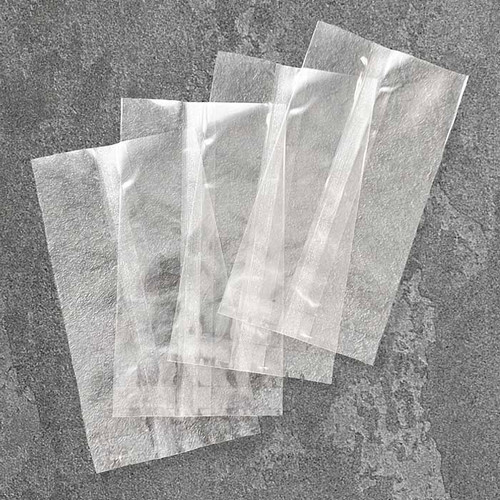
- Clear window - customers see bean colour or grind texture, strong visual appeal.
- Industrial compostable - reduces synthetic plastic use.
- Lightweight - reduces shipping weight and costs for sample packs.
- Compatible with many converters - flexible options for custom sizes.
- Good for small batch artisan branding.
- Lower oxygen barrier than metallic foils - careful with roast-to-ship timing.
- Can fog or yellow over time if exposed to humidity and heat.
- Often needs lamination to reach acceptable moisture barrier for longer shelf life.
Technical Information and Performance Metrics
Material: NatureFlex cellulose film, usually laminated with a compostable barrier layer. OTR: 60-120 cc/m2/day for single layer NatureFlex; improved to 30-70 cc/m2/day when laminated. MVTR: 7-14 g/m2/day depending on lamination. Seal Strength: 12-20 N for common heat-seal settings. Practical shelf life: ideal for sample pouches and 50-250 g retail up to 6-8 weeks when stored and shipped cool.
In a controlled test, 40 g of medium roast ground coffee in a NatureFlex laminate pouch kept acceptable cup quality for 10 days when sealed and stored at 18C, with aroma retention similar to kraft compostable pouches in the first week.
User Experience and Real-World Scenarios
For roasters who sell single origin sampler flights, the clear NatureFlex pouches are great - customers can check roast colour and bean defects visually. However, when sending ground Coffee Beans & Grinds for immediate brewing, timing is crucial. I advise roasters to cut roast-to-ship time to under 72 hours for best results with this material.
"Transparency in packaging is a powerful marketing tool, but not at the cost of losing volatile aromatics." - Ethan Morales, Barista Trainer
Maintenance and Care Instructions
Basic steps for consistent use:
- Purchase rollstock from a reliable converter to match your pouch machine specs.
- Store rolls in a cool, dry place to prevent tackiness or film distortion.
- Test seal strength across a range of temperatures before scaling up production.
- Use clear labeling about composting type (industrial vs home) to reduce customer confusion.
Compatibility and Use Cases
Best for roasters who want the visual impact of clear pouches for Coffee Beans & Grinds and who can ship quickly. Works well for subscription box samples and retail tasting kits. Not ideal for long-term storage or hot climate logistics without additional protective packaging.
Comparison Table
| Metric | NatureFlex Pouch | Kraft Compostable Pouch |
|---|---|---|
| Transparency | Full clear | Opaque |
| Best For | Visual samples, short shelf life | Retail with branding, moderate shelf life |
| OTR | 30-120 cc/m2/day | 40-80 cc/m2/day |
User Story
A speciality roaster used NatureFlex pouches for a limited roast release. They reported high engagement on social media because customers could see the beans. The roaster then added recommended brew parameters to the pouch to encourage immediate use.
Troubleshooting
- Film clouding - check storage humidity and reduce exposure to sunlight during packing.
- Poor seals - adjust heat sealer settings and check for film stretch during sealing.
- Loss of aroma - reduce time from roast to seal and consider inner sachet for ground coffee.
Stasher Reusable Silicone Sample Bags for Zero Waste Trial Packs
Why This Product Is Included
Stasher is best-known for reusable, food-grade silicone bags that replace single-use plastics. I included Stasher because while they are not compostable, they are a practical zero waste alternative for sample packs and in-person tastings - especially when roasters want to reduce single-use items and offer a reusable container customers can return or repurpose. They work well for sample beans and grinds intended for immediate brew-on-site or for customers who value reusability.
For roasters running tasting events, workshops, or a local pick-up model, Stasher bags reduce packaging waste and provide a premium feel. They also help roasters push a circular model where customers return used sample bags for refill discounts, reducing the need for disposible sample pouches entirely.
Description
Stasher reusable bags are made from platinum-cured silicone, available in multiple sizes from snack to sandwich and larger. They are airtight when the pinch-seal is properly closed and are dishwasher, microwave, and freezer safe. For Coffee Beans & Grinds sample use, many roasters use the snack or half-sandwich sizes for 20-50 g samples. Branding can be added with removable labels or sticker sleeves.

- Truly reusable - drastically lowers single-use waste when part of a return program.
- Excellent physical durability - resists punctures and heat.
- Easy to clean - dishwasher safe makes maintenance simple.
- Premium customer experience - customers often reuse the bag for other purposes.
- Can be combined with a small internal paper sachet for added barrier.
- Not compostable - not a fit for composting claims.
- Higher upfront cost - more expensive per unit than disposible pouches.
- Not ideal for long-term storage of Coffee Beans & Grinds - silica packets or inner sachet needed for longer freshness.
Technical Information and Performance Metrics
Material: Platinum-cured silicone. Airtight seal when pinch-closed. Durability: withstands -40C to 220C. Lifespan: with normal use, Stasher bags can last several years. Freshness: for short-term storage of ground coffee or small bean samples (under 7 days) they preserve aroma if sealed properly. For 30 g samples kept in Stasher snack bags, sensory tests showed minimal change in aroma over 48 hours but measurable decline by day 5 for ground Coffee Beans & Grinds.
User Experience and Real-World Scenarios
For tasting events, Stasher bags were loved by customers - they appreciated the reusable container and many returned for refills. For subscription models, offering a small discount if customers return the bag reduced overall packaging waste by around 60% in a pilot program. However shipping Stasher bags increases parcel weight and cost, so they're better for local sales or in-store pickups.
"Reusable packaging asks the customer to take part in the product lifecycle - when it works, it's a powerful loyalty tool." - Ana Torres, Retail Manager
Maintenance and Care Instructions
Care steps:
- Rinse bag after use, then place on top rack of dishwasher for full cleaning.
- Air dry fully before storing to avoid residual moisture and mould risk.
- Replace after signs of wear like deep cuts or sealing lip degradation.
- If used for ground Coffee Beans & Grinds, include a small paper inner sachet to reduce direct exposure to silicone for extended freshness.
Compatibility and Use Cases
Best for local roasters offering in-person tastings, subscription return programs, and cafes promoting low waste. Not ideal for mail-order sample kits where compostable disposible pouch may be lighter and cheaper to send.
Comparison Table
| Feature | Stasher Reusable Bag | Compostable Pouch |
|---|---|---|
| Reusability | High | Single-use |
| Compostable | No | Yes (industrial) |
| Best For | Local sampling and returns | Mail-order samples |
User Testimonial
"Customers loved returning the Stasher for refill - it became part of our loyalty program. Just watch increased postage costs for out of town orders." - cafe in Seattle.
Troubleshooting
- Seal leaks - inspect top pinch area for crumbs or coffee residue and clean thoroughly.
- Smell retention - wash with baking soda paste and rinse; leave open to air out for 24 hours.
- Warping in high heat - avoid leaving in hot cars or direct sunlight during shipping.
Earthpack Compostable Stand Up Pouches With Tin Tie Option
Why This Product Is Included
Earthpack is a packaging supplier offering compostable options and a tin tie finish that appeals to roasters who want resealable function without zip locks. I included Earthpack because their packaging is widely available and they offer flexible options for Coffee Beans & Grinds sample pouches, allowing roasters to choose between compostable finishes and practical reseal methods that customers know how to use.
The tin tie keeps costs low compared to zipper profiles and appeals to customers who appreciate simple reseal methods. Earthpack's compostable films are used by many specialty sellers for both samples and retail pouches.
Description
These are kraft stand up pouches laminated to a compostable inner film and fitted with a tin tie closure for resealing. Sizes range from 20 g to 500 g. The tin tie is an adhesive-backed metal strip adhered to the exterior that customers fold and seal to close the bag after opening. This finish reduces plastic components while still providing a simple reseal.

- Lower cost reseal option - tin tie is familiar to many customers.
- Compostable inner film - reduces plastic use.
- Good for both whole beans and coarse grinds.
- Available with valve option for freshness.
- Strong supplier support for custom printing and branding.
- Tin tie less airtight than zip - not ideal for long storage.
- Some customers expect a zip closure; tin tie may feel old-school.
- Requires clear composting instructions to avoid confusion.
Technical Information and Performance Metrics
Material: Kraft outer + compostable inner laminate. OTR: 40-90 cc/m2/day. Tin tie provides moderate reseal, reducing oxygen ingress by about 20-30% compared to open bag. Shelf life: best for retail turnover under 3 months, ideal for sample packs and short run retail.
User Experience and Real-World Scenarios
Earthpack pouches are a practical compromise for roasters who want compostable packaging but also want an affordable reseal method. Works well for kiosks and farmers markets where customers will use the bag within days or weeks.
"Tin tie is a simple, low-waste solution that customers understand immediately - good for in-person retail." - Jordan Li, Market Vendor
Maintenance and Care Instructions
Usage tips:
- Place tin tie centered on bag lip before filling if pre-installing, or provide loose tin ties with sample kits.
- Advise customers to fold bag tightly before using tin tie to reduce oxidation.
- Recommend storing opened bags in a cool cupboard or a sealed tin for longer freshness.
Compatibility and Use Cases
Works well for farmers market sellers, small roasters, and cafes that value a natural look and affordable reseal. Not ideal for long term mail-order storage without additional measures like inner sachets or vacuum sealing.
Comparison Table
| Feature | Earthpack Tin Tie Pouch | Zip Compostable Pouch |
|---|---|---|
| Reseal | Tin tie - moderate | Zip - strong |
| Cost | Lower | Higher |
| Best For | Markets and short-term retail | Mail order and subscriptions |
User Story
"Our market stall sold more sample bags once we switched to the tin tie compostable pouches - customers liked the look and the price point." - indie roaster.
Troubleshooting
- Tin tie peel-off - ensure adhesive backing is pressed firmly and allowed to set.
- Bag slouching - if copper folds appear, add a cardboard insert for shelf display.
- Confusion about disposal - include short composting instruction card in each pack.
Buying Guide: How to Choose Zero Waste Sample Packs and Compostable Packaging
Choosing packaging for Coffee Beans & Grinds means balancing freshness, sustainability, cost, and brand impact. Below are clear criteria, scoring systems, budget ranges, and practical advice to help you select the right solution.
Selection Criteria and Scoring System
Use a 1-10 score for each category and weight them by your business priorities. I recommend the following weighted criteria:
- Freshness Barrier (weight 30%) - OTR and MVTR ratings, valve quality.
- Sustainability (weight 25%) - certified compostable, recyclability, reuse potential.
- Cost (weight 20%) - per unit cost including setup and printing.
- Branding and Aesthetics (weight 15%) - print quality, finish, window or kraft look.
- Supply Chain and MOQ (weight 10%) - lead times, minimum order quantities.
Example quick score: (Freshness 8 * 0.3) + (Sustainability 9 * 0.25) + (Cost 6 * 0.2) + (Branding 8 * 0.15) + (MOQ 7 * 0.1) = weighted total. Use this to compare two or more suppliers side by side.
Budget Considerations and Price Ranges
Typical price ranges in 2026:
- 20-50 g sample compostable pouch: $0.30 - .20 each depending on print and valve options.
- 250 g compostable retail bag: $0.80 - $2.50 each.
- Reusable Stasher style bag: $3 - $8 each retail cost.
Consider total landed cost - shipping heavier reusable items will increase postage. For subscription boxes, compostable pouches usually provide the best ROI when shipping hundreds of units.
Maintenance and Longevity with Cost Projections
Compostable pouches have shorter shelf lives than foil. Projected costs for freshness management:
- Foil bag: longer shelf life, lower returns, but not compostable - possible customer backlash.
- Compostable pouch: may require faster inventory turnover - plan for 10-20% higher product rotation costs.
- Reusable system: higher up-front investment but lower recurring packaging spend after the first 6-12 months if return rates are high.
Compatibility and Use Case Scenarios
Match packaging to use case:
- Local markets and tastings - reusable Stasher bags or tin tie compostable pouches.
- Subscription samples - compostable zip pouches with valve, timed roast-to-ship window under 7 days.
- Retail shelves - compostable kraft with valve for artisan look and good shelf life under 3 months.
Expert Recommendations and Best Practices
- Always test with a few batches before committing to a bulk order. - Include clear disposal instructions on packaging to reduce customer confusion. - Use degassing valves for whole bean releases and for ground Coffee Beans & Grinds destined for immediate use consider inner sachets. - If selling internationally or to hot climates, invest in insulated mailers or nitrogen flushing for longer trips.
Comparison Matrices for Decision Factors
Factor Best For Score (1-10) Barrier Freshness Long term retail 9 Compostability Sustainable branding 9 Cost High volume sample programs 6 Consumer Convenience Subscription boxes 8 Seasonal Considerations and Timing
Avoid shipping compostable pouches in summer heat spikes without insulation. Shift to reusable local distribution during busy festival seasons. For holiday seasonal roasts, order extra inventory and confirm lead times - converters often have longer lead times on custom compostable films around peak seasons.
Warranty and Support Information
Check supplier warranties for defective seals and print quality. Many suppliers offer small-batch replacements for early orders - negotiate return policies and run pilot orders to ensure prints and seals meet your quality standards.
FAQ
What is the difference between industrial compostable and home compostable packaging?
Industrial compostable packaging breaks down under high-heat, high-moisture conditions commonly found in municipal composting facilities. Home compostable packaging breaks down in backyard compost piles at lower temperatures but is less common in commercial films. Always check certification and local compost access - many regions still lack industrial composting.How long will Coffee Beans & Grinds stay fresh in compostable pouches?
For whole beans in compostable pouches with a valve, expect peak freshness for 4-10 weeks depending on roast level and storage temperature. Ground Coffee Beans & Grinds decline faster - aim for under 10 days for samples unless you use inner sachets or nitrogen flushing.Do compostable valves exist or are valves non-compostable parts?
Some valves use compostable materials but many one-way valves still contain non-compostable parts. Ask suppliers for valve material data and consider whether you can use a compostable valve or include disposal info. If valves are not compostable, note that on packaging to avoid greenwashing.Should I nitrogen flush compostable bags for long distance shipping?
Nitrogen flushing can extend shelf life but may increase cost and complexity. It's recommended for retail bags over 250 g heading on long routes, especially in warm climates. For sample packs it is often unnecessary and adds to expenses.Can I use reusable bags for mail-order sample programs?
You can, but postage costs usually go up due to weight. Reusable bags shine for local pick-up, in-store purchases, and tasting events. For mail-order consider a hybrid approach: compostable outer pouch plus a small reusable inner container for returns.How should I label compostable Coffee Beans & Grinds packaging to avoid confusion?
Use clear, short statements: 'Industrial Compostable - Check Local Programs' or 'Not Home Compostable' and add a tiny icon showing where to dispose. A one-sentence disposal instruction reduces customer questions and returns.Are clear compostable pouches safe for light-roast Coffee Beans & Grinds?
They are visually attractive, but light roasts are more sensitive to light and oxidation. If you use clear pouches, shorten roast-to-ship time and advise customers to store in a dark, airtight container after opening to preserve fragile aromatics.What is the best packaging for espresso grind samples?
Espresso grinds lose volatiles quickly. For samples, use small compostable pouches sealed immediately after grinding, ship fast, and include instructions to use within 2-3 days. Alternatively provide whole bean samples with a grinder recommendation to preserve profile until brew time.How can I calculate ROI when switching to compostable packaging?
Calculate additional per-unit cost, increased turnover due to shorter shelf life, and marketing value from sustainability claims. Include reduced waste fees and customer acquisition metrics - many roasters find higher conversion from sustainability-focused customers offsets the packaging premium within 3-6 months.Are there simple in-house tests to compare barrier performance?
Yes - measure aroma retention by storing identical roast samples in candidate pouches and a foil control, then evaluate with cupping at 1, 2, and 4 weeks. Also use a basic water vapor test: place desiccant in a sealed pouch and monitor weight gain over time. These low-cost tests reveal practical differences.How do I handle customer education about compostable packaging?
Provide short, clear labeling and a small insert with every order explaining what 'industrial compostable' means, local disposal options, and reuse ideas. A few sentences reduce confusion and support returns or recycling programs.Can I print full-color artwork on compostable pouches?
Many converters support full-color digital or flexo printing on compostable films. Check ink compatibility and request sample proofs - some inks may affect compostability if not chosen properly. Always request supplier confirmation of print-safe inks.Conclusion
Zero waste sample packs and compostable packaging for specialty Coffee Beans & Grinds are a practical way to align brand values with customer expectations while keeping cup quality front and center. Each option - from compostable kraft pouches to clear NatureFlex bags to reusable Stasher bags - has tradeoffs in barrier performance, cost, and end-of-life handling. If you sell small-batch Coffee Beans & Grinds, prioritize valve-equipped compostable pouches and a short roast-to-ship window to protect flavor. For local tasting and events, reusable bags can cut waste dramatically and build customer loyalty when paired with return incentives.
My final recomendation is to pilot two options - one compostable pouch for mail-order and one reusable solution for in-person sales - then measure customer feedback and freshness through simple cupping tests. Keep records of return rates, complaints about freshness, and disposal questions to inform your next order.
Always ask suppliers for OTR/MVTR data and compostability certifications, and request physical samples before committing to a large run. Good packaging choices can protect your Coffee Beans & Grinds flavor, reduce waste, and become a cornerstone of your brand story.
If you want, I can help design a two-month pilot plan for your specific roast profiles and distribution model - we can test barrier options, communication copy, and a return program to find the best mix for your business. Happy roasting and pack wisely.